
Next Generation of Intelligent Protection

Unified discovery, response, and analysis powered by artificial intelligence

Advanced Endpoint Detection and Response (EDR) certification from the AV-TEST institute, Germany


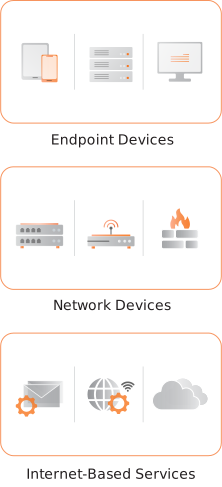
The Padvish XDR AI system is an advanced solution for organizations that require comprehensive oversight of client security, servers, and network equipment, and wish to identify hidden threats within the organization's digital space.
Padvish XDR AI detects complex infiltrations in real-time by utilizing proprietary artificial intelligence. By analyzing memory and continuously monitoring behaviors, this system prevents data destruction and tracks Indicators of Compromise (IOCs).
The Padvish XDR AI system enables the use of sandboxing, machine learning analysis, and an IPS. With its network sensors and intelligent assistant, this system accelerates threat hunting and executes immediate corrective actions.
With the Padvish XDR AI system, no security threat remains hidden in your organization's network.
Padvish CyberGPT™

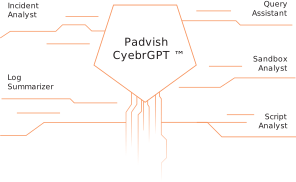
Padvish CyberGPT™ is the first Large Language Model (LLM) designed specifically for the cybersecurity domain. Developed with a combination of proven and emerging AI technologies, this model is not just a powerful text processing tool, but an intelligent security assistant capable of understanding, analyzing, and responding to complex cyber challenges.
In the design of Padvish CyberGPT™, organizational needs were considered with a realistic perspective on technical limitations and the current knowledge level of the security market.
Developed by Amnpardaz Software Company, this system provides a secure foundation for organizations to leverage AI for faster decision-making, threat analysis, and incident response.
Beyond a simple technology, Padvish CyberGPT™ is a starting point for organizations to adopt the next generation of security systems.
Padvish XDR AI Coverage

Key Components of Padvish XDR AI
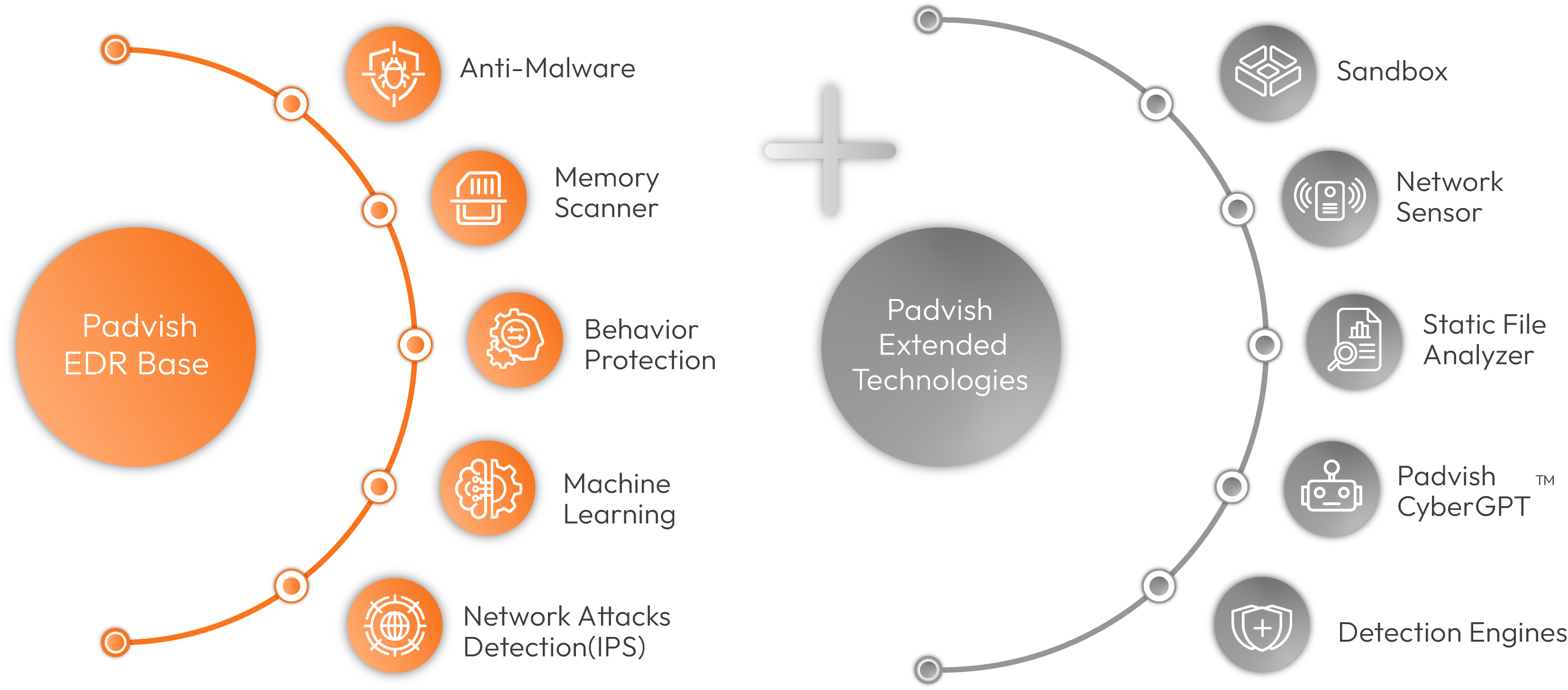
Anti-Malware
Detects and responds rapidly to Indicators of Compromise (IOCs), such as malicious file hashes and sequences of malicious code.
Memory Scanner
Analyzes and monitors cyberattacks and processes running in the system memory.
Behavioral Protection
Monitors and analyzes system process behavior using various sensors and detects cyberattacks by identifying unusual patterns.
Machine Learning
Utilizes machine learning algorithms to detect security threats, behavioral deviations, and suspicious code.
Intrusion Prevention System (IPS)
Detects and protects against network-based intrusions and exploits (such as Log4j and ZeroLogon).
Sandbox
Executes suspicious files in an isolated environment to analyze and monitor their behavior.
Network Sensor
By examining raw traffic packets across the network, this sensor identifies attacks originating from unprotected endpoints or areas outside the scope of monitored assets.
Static File Analyzer
Examines files to detect security threats, Indicators of Compromise (IoCs), or obfuscation techniques and determines their static characteristics.
Padvish CyberGPT™
An AI-powered assistant that summarizes suspicious activities, analyzes complex scripts, and generates threat hunting (search) queries.
Multi-Engine Detection
Integrates multiple antivirus engines to increase threat detection accuracy.
Key Components of Padvish XDR AI
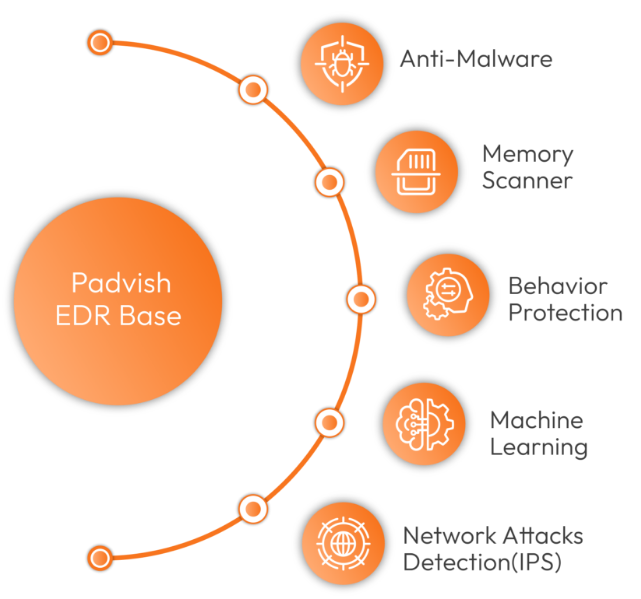
Anti-Malware
Detects and responds rapidly to Indicators of Compromise (IOCs), such as malicious file hashes and sequences of malicious code.
Memory Scanner
Analyzes and monitors cyberattacks and processes running in the system memory.
Behavioral Protection
Monitors and analyzes system process behavior using various sensors and detects cyberattacks by identifying unusual patterns.
Machine Learning
Utilizes machine learning algorithms to detect security threats, behavioral deviations, and suspicious code.
Intrusion Prevention System (IPS)
Detects and protects against network-based intrusions and exploits (such as Log4j and ZeroLogon).
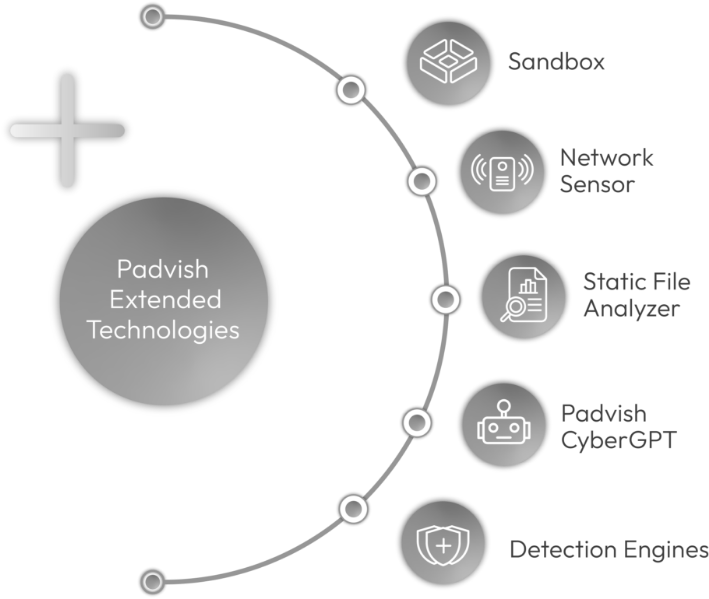
Sandbox
Executes suspicious files in an isolated environment to analyze and monitor their behavior.
Network Sensor
By examining raw traffic packets across the network, this sensor identifies attacks originating from unprotected endpoints or areas outside the scope of monitored assets.
Static File Analyzer
Examines files to detect security threats, Indicators of Compromise (IoCs), or obfuscation techniques and determines their static characteristics.
Padvish CyberGPT™
An AI-powered assistant that summarizes suspicious activities, analyzes complex scripts, and generates threat hunting (search) queries.
Multi-Engine Detection
Integrates multiple antivirus engines to increase threat detection accuracy.
Credentials & Achievements


Operational Capabilities

Comprehensive and Unified Visibility
Aggregates telemetry data from various layers (beyond endpoints) for complete threat visibility.

Operational Effectiveness
Allows security teams to focus on high-priority incidents.

Reduction of False Positives
Uses AI to correlate data from multiple sources, reducing false positives and increasing detection accuracy.

Scalability and Future-Readiness
Addresses the shortage of security specialists and counters rapidly changing threats.

Accelerated Incident Response
Reduces Mean Time to Detect (MTTD) and Mean Time to Respond (MTTR).

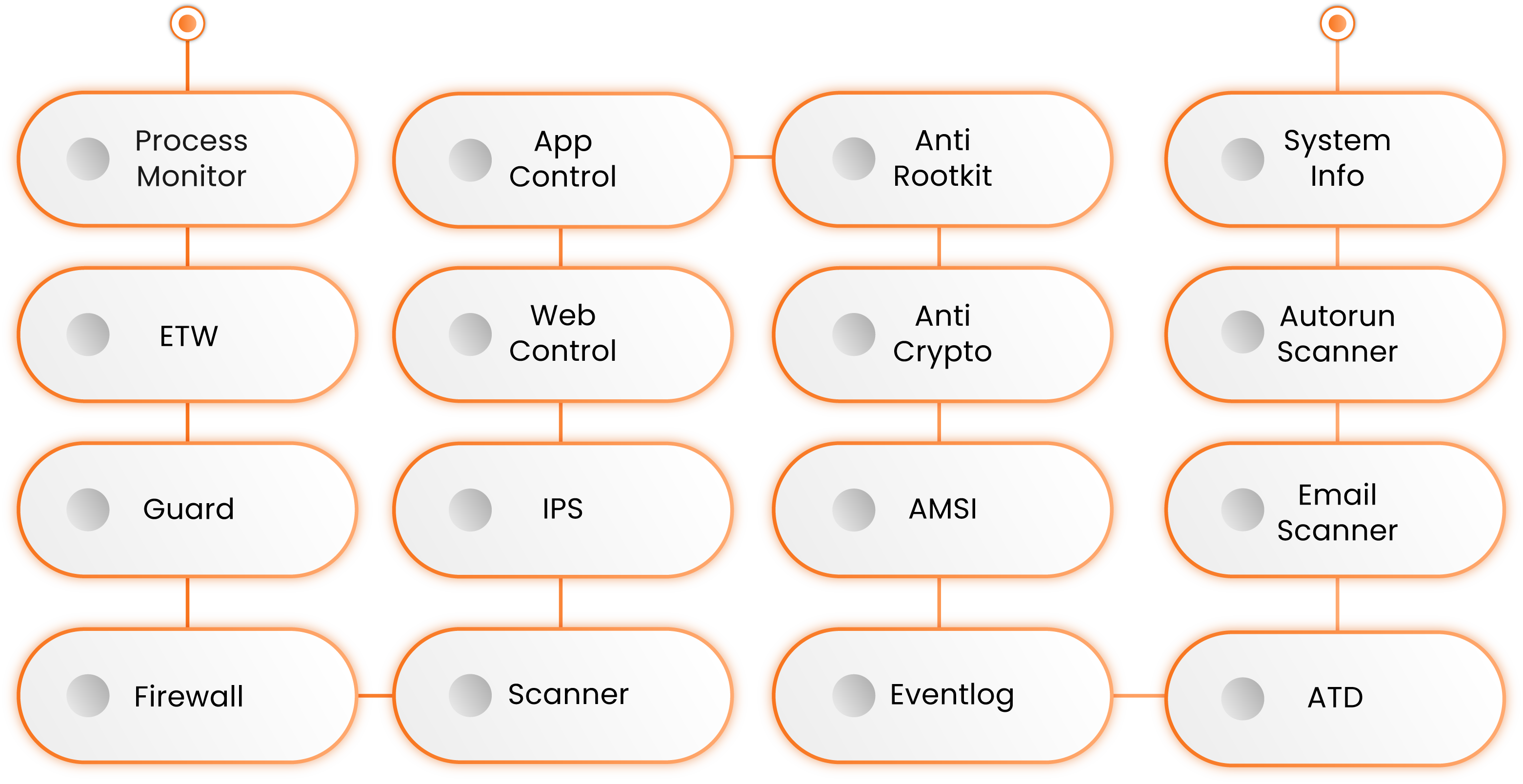
Padvish XDR AI Telemetry Engines

Smarter Detection and Response
Enhances complex threat detection power using AI and machine learning to provide faster and smarter responses.
Padvish XDR AI Telemetry Engines
Frequently Asked Questions
Have a question?We are here to answer
Learn more about Padvish XDR AI

